Quick Answer:To put kief on a joint, either mix a small pinch (about 0.05g to 0.1g) into your ground flower before rolling, or lightly moisten the outside of a finished joint and roll it through a thin layer of kief. Mixing kief inside gives the most even burn, while coating the outside looks impressive but burns faster and drops more kief.
Kief is the fine, sandy resin that collects in the bottom chamber of your grinder. It’s packed with cannabinoids and terpenes, and adding it to a joint is the most common way people use it.
The catch is that kief changes how a joint burns. Too much in one spot causes canoeing, and loose kief on the outside can fall off before you light up.
This guide walks you through:
What kief is and how it compares to flower and hash
How much kief to put in a joint by experience level
Five step-by-step methods, inside and outside the paper
How to make kief stick and keep a kief joint from canoeing
Common mistakes, storage tips, and ready-made kief prerolls
Kief (also spelled keef or kif) is the collection of resin glands, called trichomes, that break off cannabis flowers. California regulators define kief as “the resinous trichomes of cannabis” that have been separated from the plant.
Those trichomes are where the plant makes its active compounds. A Frontiers in Plant Science review explains that stalked glandular trichomes on female flowers produce resin containing cannabinoids like THCA and CBDA, along with terpenes.
Kief vs Cannabis Flower vs Hash
Kief sits between flower and hash. It’s loose trichome powder, while hash is kief that’s been pressed together.
Feature
Cannabis Flower
Kief
Hash
What It Is
Whole dried buds
Loose trichome powder
Kief pressed into a solid
Texture
Leafy, sticky
Fine, sandy, light
Dense, pliable or crumbly
Typical Potency
US dispensary flower averaged about 21% to 25% THC in a 2024 study
Concentrated resin; varies widely by source and sieve
The EU Drugs Agency notes that traditional resin production uses rubbing and sieving to dislodge trichomes into a fine, THC-rich powder. At home, the most common method is simpler:
Three or Four-Piece Grinder: A screen lets trichomes fall into a bottom kief catcher as you grind.
Kief Box or Sifter: A screened box separates trichomes when you gently shake dry flower over it.
Scraping Tool: A small plastic or metal scoop pulls kief out of the catcher without wasting it.
How much kief to put in a joint depends on your tolerance. Kief is concentrated, and Health Canada advises that extracts like hash and kief contain a high concentration of THC, recommending that new users avoid them.
Use these as starting points for a standard 1g joint:
Experience Level
Kief per 1g Joint
Roughly
Best Method
Occasional User
0.05g
A small pinch
Mixed throughout
Regular User
0.1g
A level scoop
Mixed or layered
Experienced User
0.15g to 0.2g
Two scoops
Layered or center line
High Tolerance
0.2g to 0.3g
A light outer coat
Inside plus outside
A few rules before you start:
Start Small: You can always add more next time, but you can’t take kief out of a lit joint.
Puff Slowly: Health Canada suggests starting with 1 or 2 puffs, then waiting, since inhaled effects can take up to 30 minutes to fully arrive.
Know the Risk:NIDA notes that anxiety and panic are more common when someone uses a large amount or a strong product.
How to Put Kief in a Joint: 3 Inside Methods
Putting kief inside the joint is the most beginner-friendly approach. The paper protects the kief, so less falls off, and the burn stays more even.
Method 1: Mix Kief Into the Flower
This is the easiest and most even way to add kief to a joint.
Grind Your Flower: Grind about 1g to a medium-fine, even texture.
Measure the Kief: Scoop your chosen amount, such as 0.05g to 0.1g.
Mix Thoroughly: Stir the kief into the ground flower on a rolling tray or card until it looks evenly dusted.
Load and Roll: Fill your paper with the mix and roll as usual, packing it evenly.
Method 2: Sprinkle a Kief Layer
This sprinkle method puts a band of kief in the middle of the joint.
Load Half the Flower: Spread a thin, even bed of ground flower in the paper.
Sprinkle the Kief: Dust kief evenly along the center of the flower, not near the edges.
Top It Off: Cover with the rest of the flower so the kief sits inside.
Roll Firmly: Tuck, roll, and seal, keeping the kief centered.
Method 3: Roll a Kief Center Line
A center line runs a thin stripe of kief down the middle, similar to a hash hole.
Load the Flower: Spread your ground flower along the paper.
Press a Channel: Use a pen or poker to make a shallow groove down the center.
Fill the Line: Pour a thin, even line of kief into the channel.
Close and Roll: Fold flower over the line and roll tightly so the kief stays centered.
Our guide on how to roll a hash hole uses a similar center-loading technique with pressed hash.
How to Put Kief on the Outside of a Joint: 2 Coating Methods
Coating a joint in kief creates the frosty, sparkly look people associate with kief-covered joints. It’s showier than mixing kief inside, but it burns faster and wastes more.
Method 4: Moisten and Roll in Kief
This is the classic way to coat a joint in kief.
Roll a Finished Joint: Start with a tightly packed, sealed joint.
Spread the Kief: Pour a thin, even layer of kief onto a clean tray or parchment paper.
Moisten Lightly: Dampen the outside of the paper with a fingertip dipped in water. It should feel tacky, not wet.
Roll Through the Kief: Roll the joint across the kief with gentle pressure until it’s evenly coated.
Let It Set: Wait a minute or two so the paper dries and the kief holds.
Method 5: Roll a Joint With Concentrates and Kief
This method uses a thin layer of concentrate as the glue. It’s for experienced users only, since it stacks two concentrated products.
Roll a Finished Joint: Start with a firm, sealed joint.
Apply a Thin Coat: Brush or smear a very thin layer of a sticky concentrate, such as budder or a terp sauce, along the outside.
Roll in Kief: Roll the joint through a thin bed of kief until coated.
Let It Firm Up: Give it a few minutes before lighting so the coating sets.
Tacky, Not Wet: A soaked paper tears and burns unevenly, so use the least moisture that works.
Use Parchment: Rolling on parchment makes it easy to collect leftover kief.
Press Gently: Light, even pressure embeds kief without crushing the joint.
Skip Sugary Glues: Honey or syrup burns hot and tastes harsh.
Smoke It Soon: Kief on the outside falls off with handling, so light it shortly after coating.
Kief Inside vs Outside a Joint
Kief inside vs outside a joint comes down to burn quality versus looks. Here’s how the methods compare.
Method
Difficulty
Burn Evenness
Kief Lost
Feel
Best For
Mixed Throughout
Easy
Very even
Very little
Steady from start to finish
Beginners and everyday use
Sprinkled Layer
Easy
Even
Little
Stronger mid-joint
Regular users
Center Line
Medium
Even if centered
Little
Concentrated core
Experienced users
Moisten and Coat
Medium
Faster, can run
Some falls off
Strong first few hits
Special occasions
Concentrate and Kief
Hard
Slow, can drip
Little
Very strong
High tolerance only
Does Kief Make a Joint Stronger?
Yes. Kief is concentrated trichome resin, so adding it raises the total cannabinoids in each hit. The EUDA’s drug profile notes that during smoking, THCA is partly converted to THC, which is what makes kief active in a joint.
Kief Joint Effects
Faster, Heavier Onset: Effects build quickly and feel more intense than a plain joint.
Bigger Flavor: Kief carries terpenes, so the first hits often taste stronger.
A kief joint burning unevenly usually means the kief is clumped on one side. Canoeing happens when one side burns faster than the other, leaving a hollow “canoe.”
Keep Kief Centered: Never let kief sit against one edge of the paper.
Pack Evenly: Loose spots burn faster, so roll with consistent pressure from end to end.
Use a Crutch: A filter tip keeps the joint’s shape and improves airflow.
Light Evenly: Rotate the joint while lighting so the cherry forms all the way around.
Take Slow Puffs: Hard pulls overheat the kief and speed up the burn on one side.
Fix Runs Early: Touch a flame to the slow side, or moisten the fast side slightly, as soon as you see it.
Common Mistakes When Using Kief
Most kief joint problems come from a few habits that are easy to fix.
Using Too Much: Overloading makes the joint harsh, hot, and unpredictable.
Clumping It in One Spot: Uneven kief is the top cause of canoeing.
Soaking the Paper: A wet paper tears and smolders instead of burning cleanly.
Coating Too Early: Outside kief falls off in your pocket, so coat right before smoking.
Rolling Too Loose: Kief sifts through loose spots and falls out the end.
Skip the Rolling: Kief Prerolls From Mellow Fellow
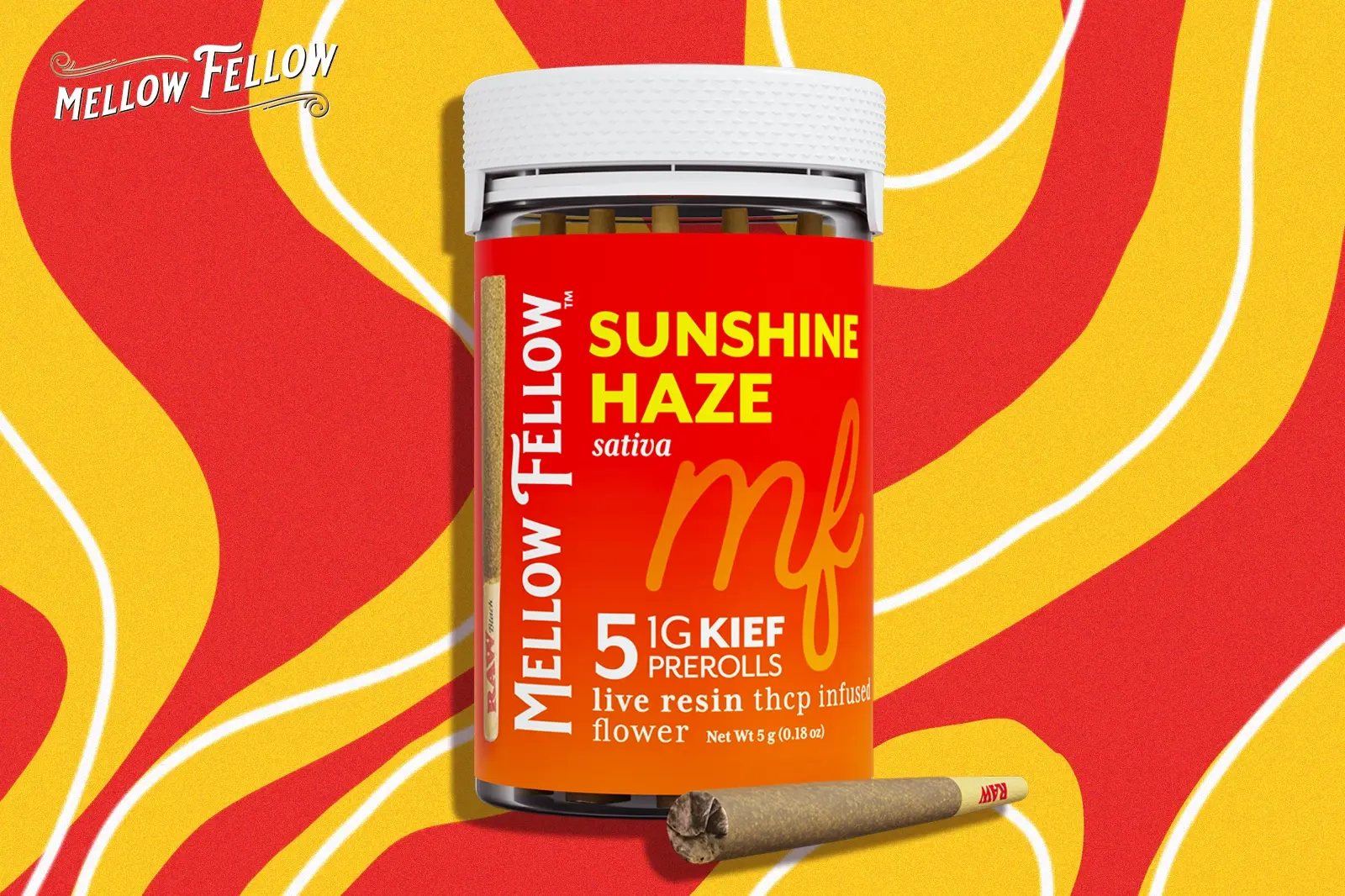
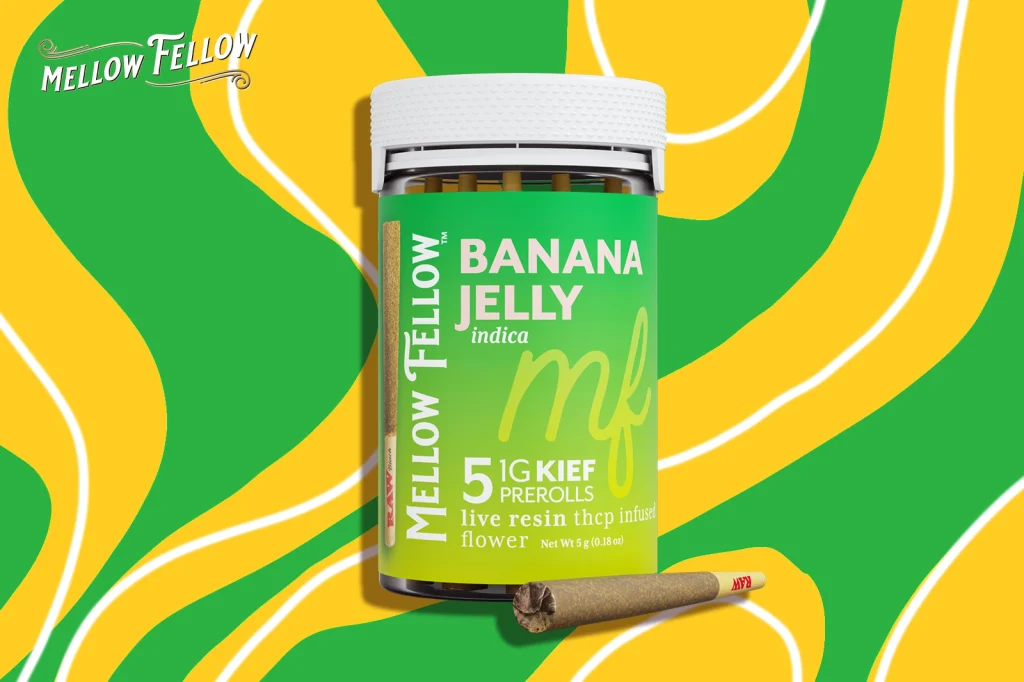
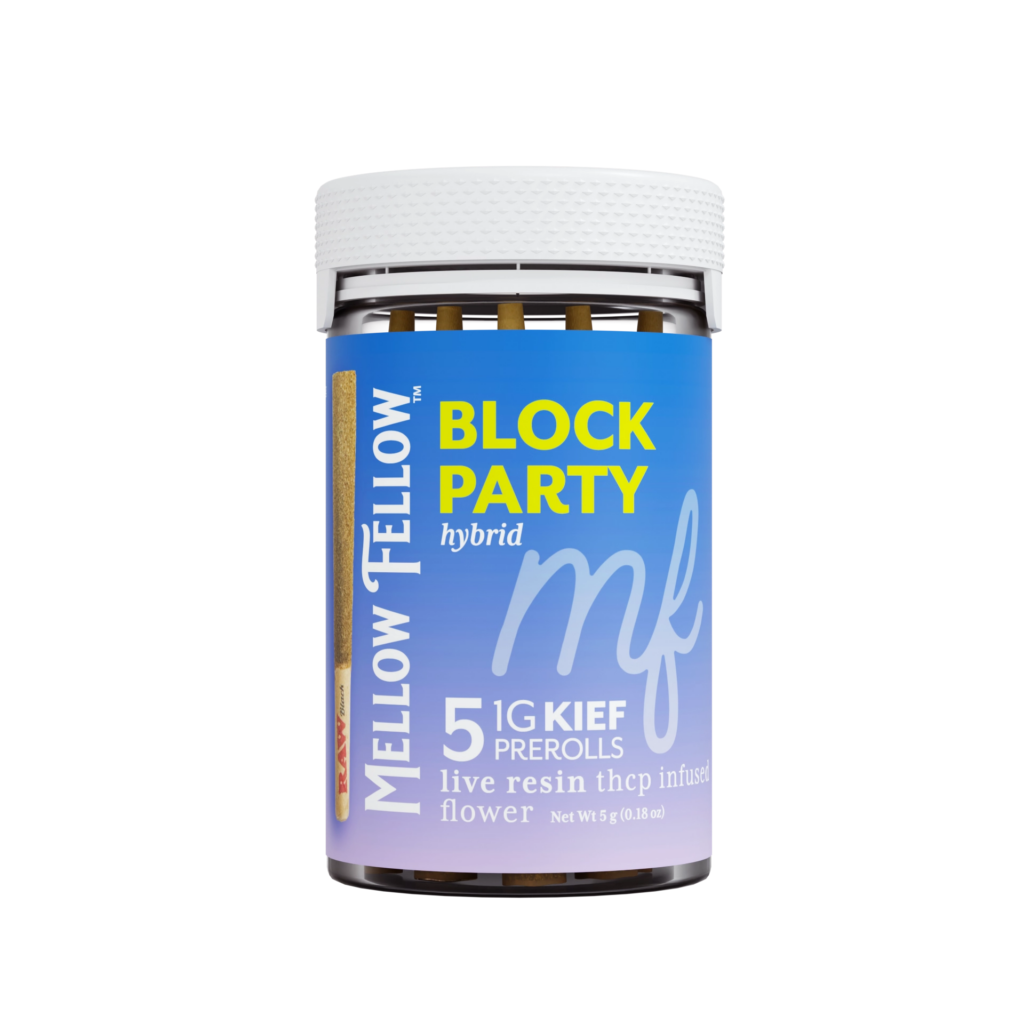
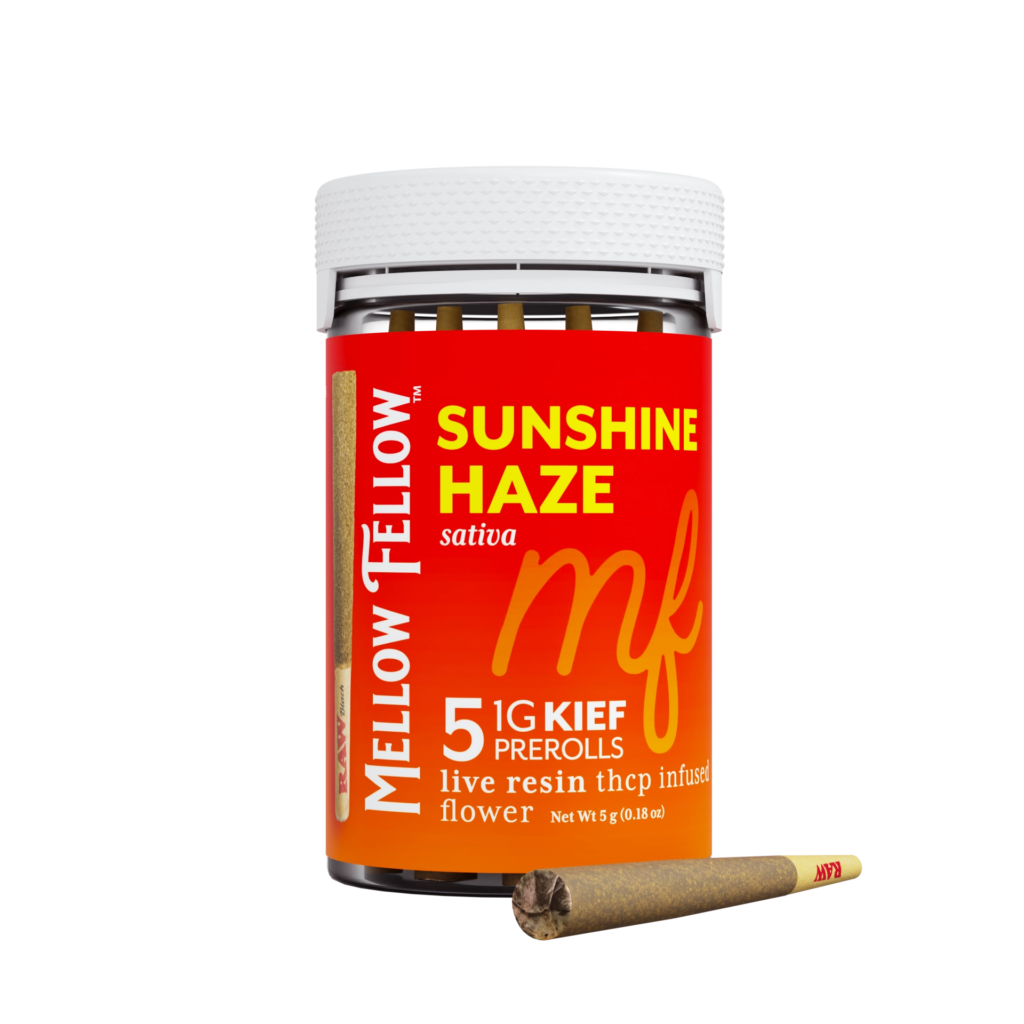
If you’d rather not measure, sprinkle, and roll, Mellow Fellow’s kief prerolls are ready to light. Each pack holds five 1g joints with THCp, a highly potent cannabinoid covered in our THCp potency guide.
Consistent Every Time: No guessing how much kief went in or where it landed.
No Canoeing Practice Needed: Prerolls are packed for an even burn.
Strain Choice: Pick sativa for daytime, hybrid for social sessions, or indica for evenings.
Strong by Design: At 374mg of cannabinoids per joint, these suit experienced users; beginners should take one or two puffs and wait.
Our explainer on kief-coated prerolls covers how they compare with regular prerolls, and our ranking of the strongest prerolls shows where they fit in the lineup.
Kief degrades faster than whole buds because it’s loose and exposed. A Frontiers in Plant Science storage study found ground cannabis decomposes faster than whole flower because of greater surface exposure to air, and that cool storage at 4°C preserved cannabinoids best.
Block Light: A 2024 photodegradation study found light exposure is the key factor in THC degradation, and oxygen speeds it up.
Use Airtight Glass: A small, opaque, sealed jar limits air and light.
Keep It Cool: Store kief somewhere cool and dark, never in a hot car.
Skip Plastic Bags: Static makes kief cling to plastic, and you’ll lose some every time.
Use It Within a Few Months: Older kief loses aroma first, then potency.
Putting kief on a joint comes down to three choices: how much, where, and how evenly. Start with a small pinch mixed through the flower, keep kief centered to prevent canoeing, and save outside coating for when you want a stronger, showier joint. Puff slowly, since kief joints hit harder than regular ones.
Want the kief joint without the work?Shop Mellow Fellow’s current lineupand grab a pack of THCp kief prerolls in Sunshine Haze, Block Party, or Banana Jelly.
You can, but it doesn’t melt cleanly like rosin or wax, so it often leaves residue. Pressing kief into rosin or hash first gives a cleaner dab.
For most smokers, kief-coated prerolls produce stronger effects than plain flower joints because they contain more active cannabinoids per puff. THCa converts to active THC through the heat of the flame, while THCp is already active when smoked, so both deliver a potent result.
By raw cannabinoid weight, THCa kief prerolls read higher at 545mg per gram versus 374mg for THCp. THCp binds CB1 receptors far more efficiently in lab tests, so its strength comes from receptor activity rather than sheer quantity. Both are built for experienced smokers.
Kief-coated prerolls are considerably stronger than regular joints because the kief adds concentrated cannabinoids on top of the flower. Mellow Fellow’s kief prerolls test at 374mg of cannabinoids per gram for THCp and 545mg for THCa, well above the cannabinoid content of most flower alone.
Usually, yes. Kief is concentrated trichome resin, and European data shows resin averages more than twice the THC of herbal cannabis. Exact potency depends on the plant and how finely the kief was sifted.
You can sprinkle it on a bowl, press it into hash, or roll it into a blunt. Some people decarboxylate it for homemade edibles, which takes heat to activate the THCA.
Adding it to a joint or sprinkling it on top of a bowl are the most common ways. Mixing it with flower gives the most even burn, since loose kief on its own can burn too hot and fall through a screen.